

October is National Slow Down Move Over Month, and this year’s observance comes to Chattanooga on Saturday, October 17 with the Wall of the Fallen unveiling at the International Towing & Recovery Museum. The month is a reminder that the Move Over Law in Tennessee and Georgia is more than a traffic rule. It is the legal protection that allows roadside workers to do their jobs safely.
A Message from the Yates Family and Crew
For 80 years, Doug Yates Towing & Recovery has served drivers across the Chattanooga area, from the East 23rd Street yard where our grandfather Lloyd R. Yates opened his first repair shop in 1946, to every exit on I-24, I-75, and I-59 we cover today. Three generations of the Yates family have worked recovery scenes on the shoulder of active highways, and that experience is why the Move Over Law in Tennessee and Georgia matters to our team.
After four generations of running recovery calls across the region, we have seen the risks that come with distracted and careless driving near a working scene. The Move Over Law exists to reduce those risks, and public awareness remains the most important factor in making it work.
October Is National Slow Down Move Over Month
Every October, towing associations, state departments of transportation, and emergency services across the country come together to promote a single message: slow down, move over, save lives. The campaign exists because awareness is still the single biggest factor in preventing roadside injuries and fatalities. Many drivers do not know the Move Over Law applies to tow trucks. Many drivers do not know the law exists at all. October is the month the industry asks every driver to learn it, remember it, and act on it.
The Tennessee Department of Transportation runs its own Move Over campaign and maintains an official information page at tn.gov/tdot/work-with-us/move-over-law.html. Georgia’s Department of Public Safety does the same. Both agencies partner with towing and recovery professionals every year to amplify the message, because the operators who respond to roadside incidents deserve the same legal protection as any first responder.
What the Move Over Law Requires in Tennessee and Georgia
Both Tennessee and Georgia have Move Over Laws on the books, and both apply to tow trucks and recovery vehicles alongside police, fire, EMS, and utility workers. The specifics differ slightly between the two states.
Tennessee: TCA 55-8-132
Tennessee’s Move Over Law lives in Tennessee Code Annotated 55-8-132. Drivers must change lanes away from a stopped emergency, utility, highway maintenance, or recovery vehicle displaying flashing lights, as long as the lane change can be made safely. If a safe lane change is not possible, the driver must slow down to a speed well below the posted limit and watch for workers on the shoulder. TDOT’s official campaign page at tn.gov/tdot/work-with-us/move-over-law.html provides the full legal breakdown and penalty structure for Tennessee drivers.
Georgia: The Spencer Pass Law
Georgia’s Move Over Law is codified in O.C.G.A. 40-6-16 and known as the Spencer Pass Law. It is named after Spencer Pass, a man killed on the side of a Georgia highway by a passing vehicle. The law requires any driver approaching a stationary emergency, utility, or tow truck with flashing lights to move over one lane if it is safe to do so. If moving over is not safe or possible, the driver must reduce speed to below the posted limit and be prepared to stop. The law applies on all multi-lane roads and highways in Georgia, including the stretches of I-75 and I-59 that run through our north Georgia service area.
Both states carry fines, points on the license, and in cases where a worker is injured or killed, criminal penalties that can include jail time.
Safety Protocols on Every Roadside Call
Doug Yates operators follow established industry safety protocols on every call:
- Wear high-visibility reflective apparel (ANSI Class 2 or 3)
- Activate amber flashing lights, the designated color for recovery operations in Tennessee and Georgia
- Deploy reflective triangles or flares at federally required distances
- Position the truck as a physical shield between traffic and the work area
- Work from the passenger side of the vehicle when possible
- Coordinate with dispatch and law enforcement on high-traffic incidents
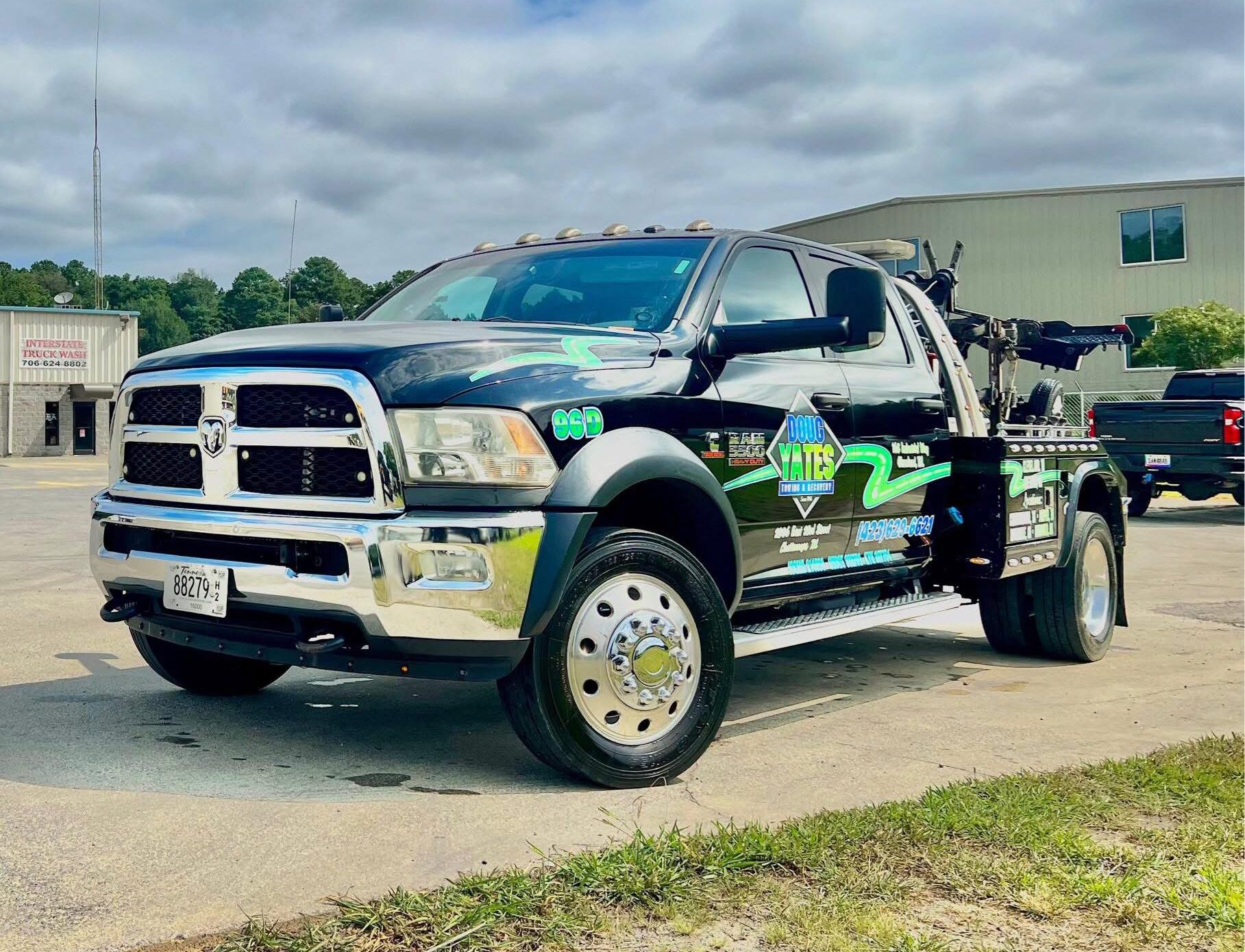
Every Doug Yates driver completes Traffic Incident Management (TIMS) training, and select operators are also TRIP-certified through Georgia’s Towing and Recovery Incentive Program. These are not optional practices. Operators follow them on every call, in every condition. You can see our fleet and the amber lights that identify a working recovery scene at yateswrecker.com.
The industry does its part. The Move Over Law asks drivers on the road to do theirs.

What to Do When You See Flashing Lights Ahead
When you see amber, red, or blue flashing lights on the shoulder in front of you, the Move Over Law in Tennessee and Georgia asks for four things.
First, put down anything that is not driving. Phone, food, radio adjustments, and conversation can all wait.
Second, check the next lane over. If a safe lane change is possible, make it well in advance of the scene rather than at the last moment.
Third, if moving over is not safe, reduce your speed significantly below the posted limit. Industry safety guidance recommends dropping at least 20 miles per hour, more in bad weather or at night.
Fourth, give the scene room. The struck-by zone extends further than most drivers think, and workers often need to move around the vehicle unpredictably as they work. A wide berth and a slow pass is the best protection you can offer the people on the shoulder.
These four actions take almost no time and in many cases prevent a serious injury or fatality.
Slow Down, Move Over, Save Lives
The national campaign slogan is simple: slow down, move over, save lives. The ask is simple too. One lane change, a reduction in speed, a moment of attention, and nothing more.
Towing is consistently ranked as one of the most dangerous professions in America. A tow operator is killed in the line of duty in this country roughly once a week, almost always after being struck by a passing vehicle. The crews that respond to breakdowns, accidents, and recoveries across Tennessee and Georgia are professionals performing their work on an active roadway, and the Move Over Law provides the legal buffer that allows that work to be done safely.
When you see flashing amber lights on the shoulder ahead, assume a person is out there working. Move over if you can, slow down if you cannot, and put the phone down.
Ben Moore’s Story
The need for the Move Over Law is not an abstract one. On October 1, Ben Moore, a heavy-duty tow operator with Doug Yates Towing & Recovery, was struck by a passing vehicle while responding to a disabled tractor-trailer on Interstate 24. The driver was cited for violating Tennessee’s Move Over Law.
Ben did everything right. His amber lights were on, his reflective triangles were out, and he was in high-visibility gear. He is a husband, a dad, a brother, and an uncle. A distracted driver still nearly took his life.
His injuries are serious. His right leg below the knee was shattered. His left leg is broken, along with a fractured hand and left foot. He faces more surgery in the coming weeks and is spending three to four hours a day in physical and occupational therapy, relearning how to stand and walk. His immediate goal is to take five steps on his own by December 31. He estimates he is at least twelve months from being back behind the wheel of a heavy-duty wrecker.
Ben’s family has set up a GoFundMe to help with medical expenses and recovery: gofundme.com/f/support-ben-moores-recovery.
When you see flashing amber lights on the shoulder ahead, remember Ben. The next time you move over, you may be the reason another operator makes it home.

Museum Weekend in Chattanooga: Wall of the Fallen and Hall of Fame Induction
The International Towing & Recovery Museum sits in Chattanooga, just a few miles from where the tow truck itself was invented by Ernest Holmes Sr. in the early 1900s. Each year during Museum Weekend, the industry gathers to honor its history, recognize those who have advanced the field, and remember operators lost in the line of duty.
Wall of the Fallen Unveiling: October 17 at 10 a.m.
The museum is home to the Wall of the Fallen, a memorial dedicated to tow and recovery operators who have lost their lives in the line of duty. Each year during Museum Weekend, the names of operators killed over the previous year are added to the wall in a public ceremony. This year’s unveiling takes place Saturday, October 17 at 10 a.m. The ceremony is open to the public, and members of the industry, families of the fallen, local officials, and the general public are welcome to attend. Full Museum Weekend details are available at towingmuseum.com/museum-weekend-page.
The museum also administers the Survivor Fund, which provides financial support to the families of tow operators killed on the job. More information about the fund is available on the museum’s website.
Shannon Yates Enters the Hall of Fame
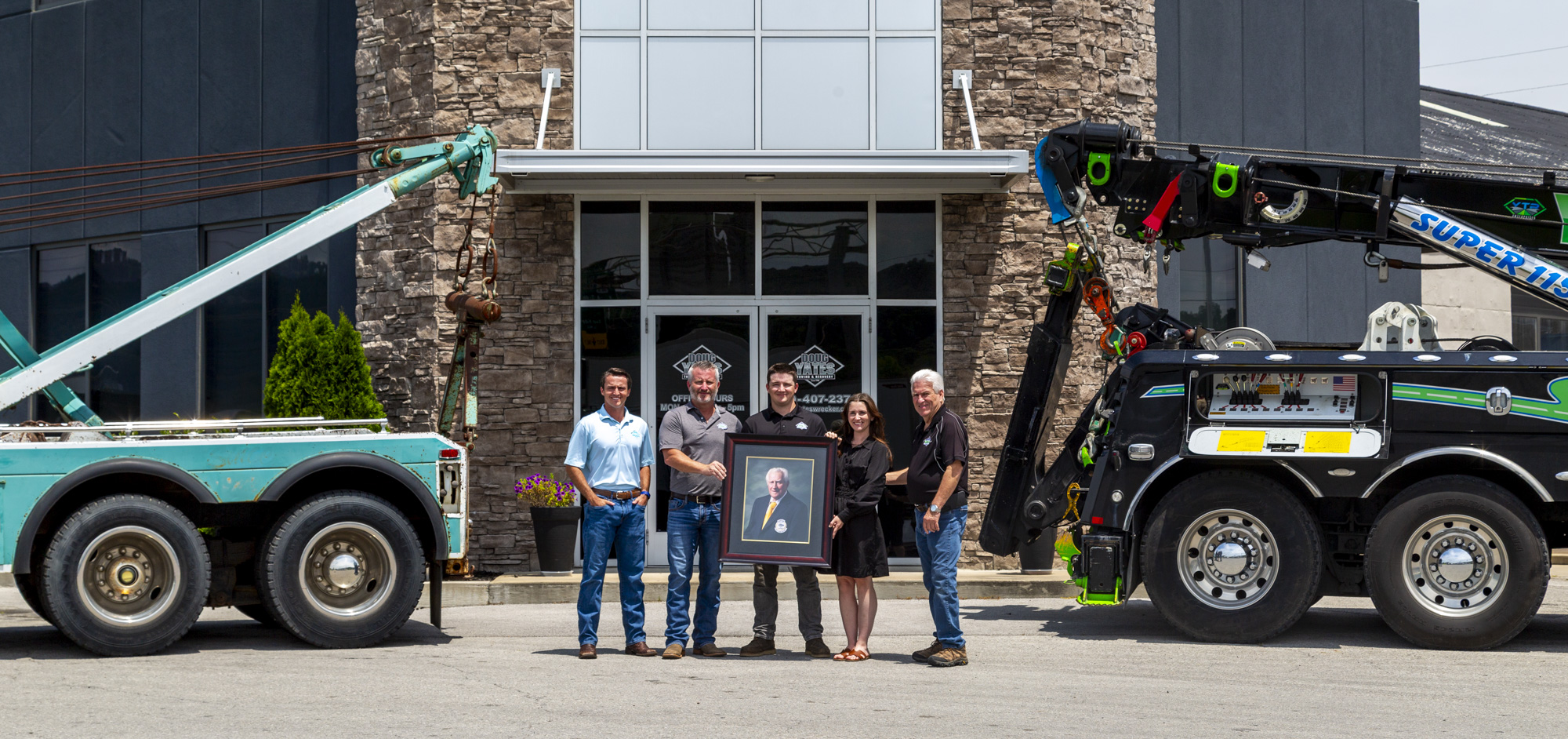
Alongside the Wall of the Fallen unveiling, this year’s Museum Weekend carries a milestone for the Yates family. On the same weekend, Shannon Yates will be inducted into the International Towing & Recovery Hall of Fame as the third generation of Yates men to receive that honor. His grandfather Lloyd R. Yates was inducted for founding the family business in 1946 and helping shape the city’s first towing ordinance. His father Doug Yates was inducted for advancing recovery equipment across the Southeast and helping draft the modern City Towing Ordinance. Shannon’s induction continues that line of industry contribution.
Both events on the same weekend serve as reminders of why the Move Over Law matters. The industry recognizes those who have built it and those who have been lost serving it. Public awareness remains the most direct way every driver in Tennessee and Georgia can help protect the operators still on the road.
Frequently Asked Questions About the Move Over Law in Tennessee and Georgia
What is National Slow Down Move Over Month?
National Slow Down Move Over Month is observed every October by towing associations, state departments of transportation, and emergency responders across the United States. The campaign brings awareness to Move Over Laws, which require drivers to change lanes or slow down when approaching stopped emergency vehicles, utility vehicles, and tow trucks with flashing lights. The goal is to reduce the number of roadside workers struck and killed by passing vehicles each year.
What is the Move Over Law in Tennessee?
Tennessee’s Move Over Law is Tennessee Code Annotated 55-8-132. Drivers approaching stopped emergency, utility, highway maintenance, or tow and recovery vehicles with flashing lights must move over one lane when safe or slow down significantly below the posted limit if a lane change is not possible. The Tennessee Department of Transportation maintains a full campaign page at tn.gov/tdot/work-with-us/move-over-law.html.
What is the Move Over Law in Georgia?
Georgia’s Move Over Law, known as the Spencer Pass Law and codified in O.C.G.A. 40-6-16, requires drivers to change lanes away from stationary emergency vehicles, utility vehicles, and tow trucks with flashing lights when it is safe to do so. If a safe lane change is not possible, drivers must slow below the posted speed limit and be prepared to stop. Violations carry fines, points on the license, and more serious penalties if a worker is injured.
Does the Move Over Law apply to tow trucks?
Yes. Both Tennessee and Georgia include tow trucks and recovery vehicles under the Move Over Law. Amber flashing lights, which are the color designated for tow operations in both states, trigger the same legal protections that apply to police, fire, and EMS vehicles with red and blue lights. Any Doug Yates Towing & Recovery truck on the shoulder with amber lights activated is a protected worksite under the law.
What is the Wall of the Fallen at the Towing Museum?
The Wall of the Fallen is a memorial at the International Towing & Recovery Museum in Chattanooga, Tennessee, dedicated to tow and recovery operators who have lost their lives in the line of duty. New names are added each year during Museum Weekend. The 2026 unveiling takes place Saturday, October 17 at 10 a.m. and is open to the public. Full event details are available at towingmuseum.com/museum-weekend-page.
What is the Survivor Fund?
The Survivor Fund is a program administered by the International Towing & Recovery Museum that provides financial support to the families of tow and recovery operators killed on the job. More information and donation options are available at towingmuseum.com/survivor-fund.
What are the penalties for not moving over?
Penalties for violating the Move Over Law in Tennessee or Georgia include fines, points on the driver’s license, and increased insurance premiums. If a roadside worker is injured or killed as a result of the violation, the driver can face criminal charges including vehicular assault or vehicular manslaughter, with the possibility of jail time.
What should I do if I cannot safely change lanes near a tow truck?
If you cannot safely change lanes when approaching a tow truck with flashing lights, the Move Over Law in Tennessee and Georgia requires you to reduce speed significantly below the posted limit and be prepared to stop. Industry safety guidance recommends slowing at least 20 miles per hour below the limit, and giving the scene as much room as the road allows.
Call 423-629-6621 Anytime You Need a Tow
For 80 years, Doug Yates Towing & Recovery has served drivers across greater Chattanooga, southeast Tennessee, and north Georgia. Our crews work the shoulder every day of the year, and the Move Over Law provides the legal protection they rely on while on scene. If you need a tow, roadside assistance, or auto repair, call 423-629-6621 anytime, day or night.
This October, during National Slow Down Move Over Month, we encourage every driver to remember the law the next time they see flashing amber lights ahead. Slow down. Move over. Save lives.
To learn more about our fleet and the services keeping Chattanooga moving for four generations, visit yateswrecker.com or browse our service area pages: Chattanooga, Cleveland, Jasper, Dalton, Ringgold, and Trenton.